by Pierluigi Mansutti IV3PRK - all rights reserved
IV3PRK Pierluigi “Luis” Mansutti
160 Meters: DXing on the Edge
All my 160 m. antennas, trough the years - part 1.
SUMMARY: the Inverted L - a top-loaded vertical - the shunt-fed tower -
Beverages forever - a magnetic loop - my first 4-square receiving array -
Pennants, single and phased - the rotatable Flag - the K9AY loop .
1985: my first 160 m. antenna - the Inverted L.
My first 160 meter antenna as been the classic “Inverted L” as designed by Stew Perry, W1BB, and originally published on the “January 10, 1981, W1BB - 160 meter Bulletin” with his hand sketch and notes below. At that time, 160 meters were not yet allowed in Italy and, of course, I was not yet interested in such a bulletin.
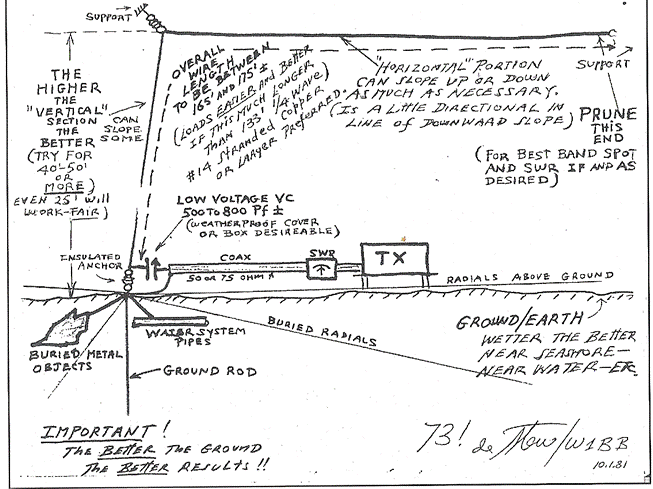
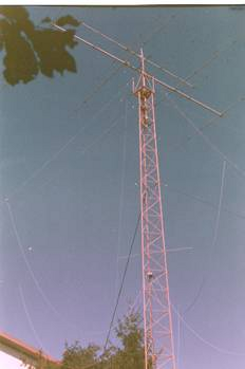
Anyway, since many years, the ARRL Antenna Book had a chapter antennas for 1.8 MHz, and when the use of the band was allowed also in Italy, I hurried up to install one - an inverted L - on my crowded 18 m. tower. Separated about one meter from it, the vertical section of 160 m. had to live together with four 80 m. ¼ wave slopers and five 40 m. ½ wave slooping dipoles, and metallic guys, but I managed to get it working, with a good SWR - below 1.3:1 from 1.800 to 1.850 KHz.
Topband was not yet a love for me: in those years, 1985-1987, 1.8 MHz represented just a new multiplier possibility in my WWDX contest multiband partecipation. But shortly, I was totally involved in the “Gentleman Band”, I resumed my CW for DXing, and left all other bands!
I wrote a short paper for the italian newcomers with some more details and tuning procedure here:
1989: a Top loaded vertical for 160 WWDX Contest from Pantelleria is.
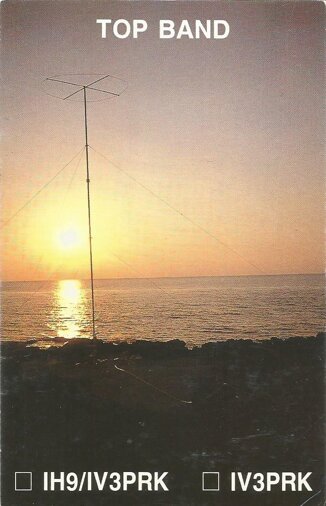
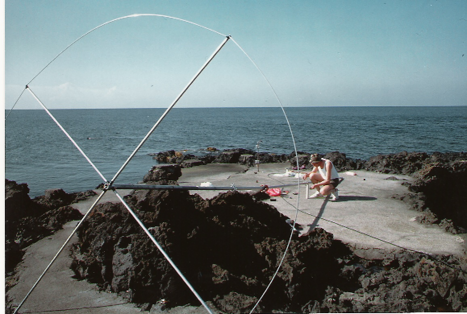
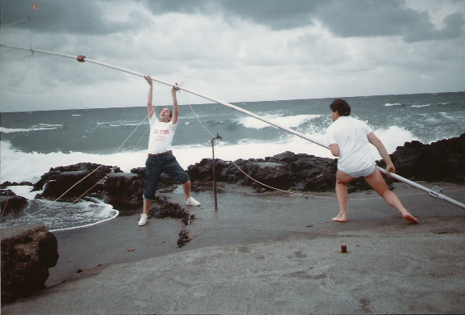
This is a particular 160 m. antenna, that I am very proud of, but has been used only two days, and never assembled again. It was in the CQWW Phone Contest of October 1989 from Pantelleria is., where I partecipated as IH9/IV3PRK in the single band - 1.8 MHz - category, and won the first place in the World.
The antenna has been designed with my first personal computer - a Commodore 64 - actually a toy bougth for my son in 1985. Nowadays, 64 Kb of memory are ridicolous, but in those years, they were sufficient to run the first DOS programs for antennas design and propagation forecasts.
The first edition of “Low-Band DXing” by John Devoldere, ON4UN, edited in 1987, had a chapter with a lot of BASIC programs printouts, regarding antennas and impedance matching, that could be typed on personal computers, and I typed most of them.
For my 160 m. DX operation from Pantelleria is., I needed a vertical antenna, shorted enough to be raised by two persons, and survive the winds, but with a lot of care to efficiency, by reducing the losses and taking advantage of salt water.
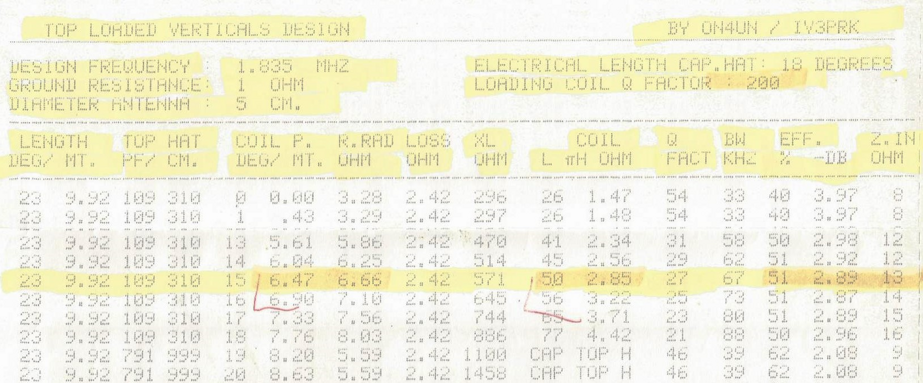
With the “Top Loaded Vertical Design” program, I got a detailed printout of all possible choices for my target, as shown below. This was my definite design:
- tube diameter: cm. 5, tube length: m. 9.92 (23 degrees);
- loading coil: L 50 µH (XL 571 ohm); 6 cm. diam./12 cm. length/ n. 45 turns of 1.3 mm. wire placed at 6.47 m. high (15 degrees);
- top hat diameter m. 3.10 (= 109 pF; el. lenth 18 deg.).
The radiation resistance was very low - 6.66 ohm - and the coil loss 2.85 ohm for a Q factor of 200, so it was mandatory to keep ohmic and ground losses extremely low in order to get at least a 50% efficency. Such an antenna does not like our gardens, but it worked very well on the island, where it was raised almost directly on the salt water with a perfect ground!
1991: new Tx antenna - the Shunt-Fed Tower.
In October 1989 I achieved my 160 m. DXCC , all in phone, but I had been totally involved in Topband and realized that it was impossible to go on with tough DX without CW. So, I resumed my key, never used since licensed 25 years before, and decided to abandon all other bands.
A new self supporting tower - 24 meters high - was mounted, with 15 meters, 4 el. yagi - as top loading - at 28 m. heigth. No other antennas, no coax or control cables going up the tower: it had to be just a quarter wave vertical antenna for 160 meters.
This TX antenna has been efficiently in use for over twenty years, until 2014, when I dismantled everything and moved to Ecuador.
It was shunt-fed with a gamma rod, tapped at 18 m. (rigth side in the picture) ad a vacuum Jennings capacitor. See al details of the Gamma Match on this PDF file:
The gamma feed was calculated with the help of always remembered Earl, K6SE. After using, for the first years, about 60 random radials, which had to be taken away in the spring season, I tried four elevated radials for the summer, and I never went back. They have been tuned as two crossed dipoles, trimmed to resonance on 1.830 KHz, and suspended from the tower with nylon ropes to freely walk around. I agree on the better efficiency of a wide on ground radial system, but we have to live with some constrains and, as a matter of fact, I always worked all the DX stations I could hear (over 300 DXCC countries on 160).
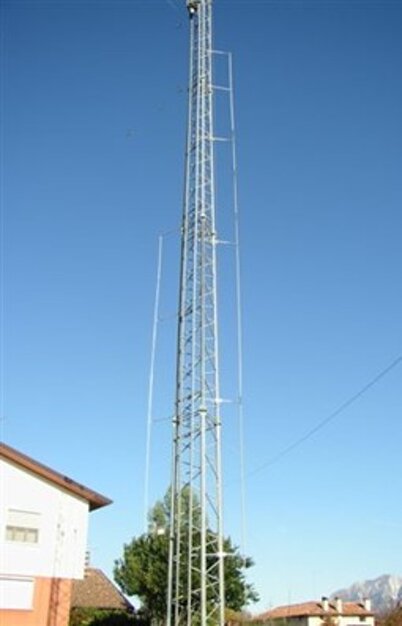
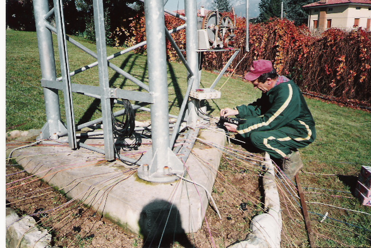
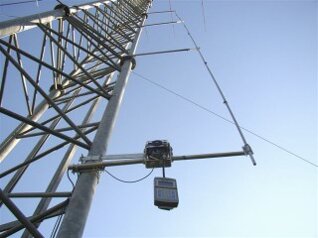
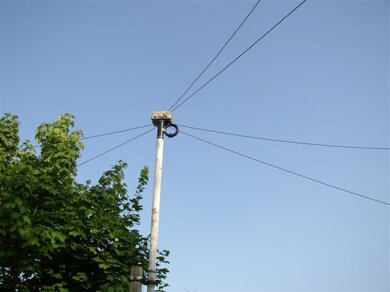
The shorter rod on the left side of the tower in the photo is the detuning loop (better shown below), using the “sectionalizing tower” method by Tom, W8JI, added some years later to help receiving antennas. Not easy to understand, but I described it with all the details on this PDF file:
Lorem Ipsum dolor sit amet
The receiving antennas: Beverages forever.
Since the beginning it was clear that the most important and difficult problem to solve on 160 meters, was t he ability to pull out of the noise weak DX signals. I tried all possible known receiving antennas, starting from the simplest and most effective one, the Beverage. Named by its inventor, Harold H. Beverage, who published a paper in 1923, it is essentially a very long wire, usually around two meters high, aimed in the desired direction.
Its simple design and characteristics are well know and have been published on all the books and magazines through the years.
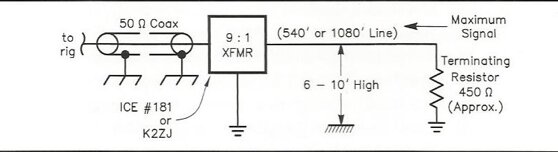
Typically, the load resistance is 450 ohms, and the heart of the antenna is the 9:1 transformer and its core material. At first, I bought the suggested small ferrite cores BBR-7731, replaced by MN60 and MN8X, but then ended with the most successful binoculars BN73-202, widely used for everything.
I tested Beverages, shorter or longer, everywhere, but only during the winter seasons over my neighbours fields, and that's a nuisance. Anyway, my best receiving antenna has been for many years a 175 m. Beverage, lying out along the main road in the NNW direction, towards U.S. West Coast; another one of the same length, in the South direction, but put above a metallic fence, did never work.
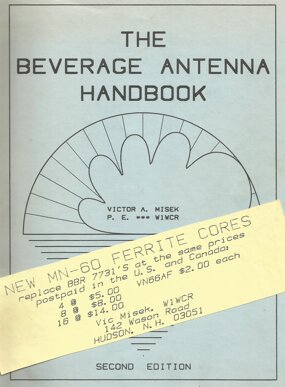
The length of 175 meters has been suggested as the best one by Victor Misek in his “Beverage Antenna Handbook” and also by John ON4UN in “Lowband DXing” , and corresponds to the “Cone of Silence" mode.
If you live in the open countryside, with a lot of space, install a switchabe system of long Beverages in every direction and you don't need anything else (the longer they are, the many you need, because of sharper lobe).
Unfortunately, I never could do that, and tehrefore I spent over twenty years at the search of other solutions!
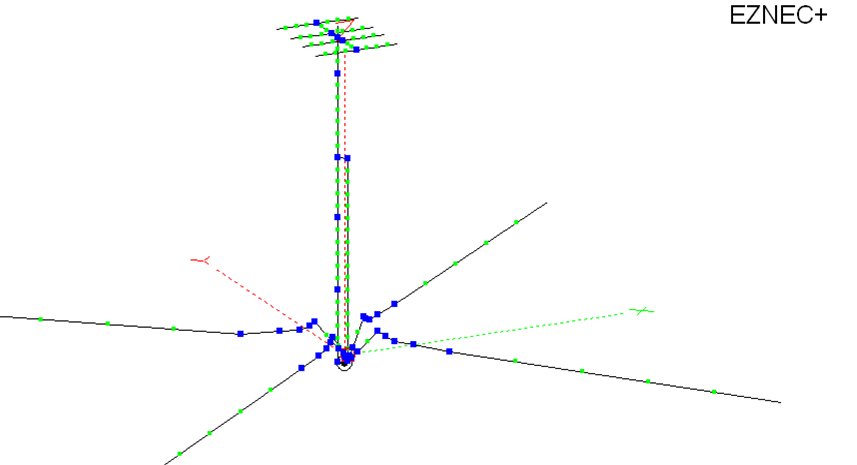
In order to evaluate Beverage antennas - and others - let me introduce this short paper, where the concept of RDF - Receiving Directivity Factor - is well explained:
It is an extract of a huge work (26 pages), with a complex EZNEC analysis
of all my antennas and the interactions among them:
1992: a magnetic loop.
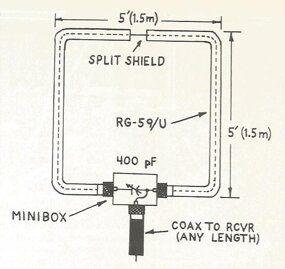
After dismantling the Beverages at incoming spring season, I needed another receiving antenna, despite the lower summer activity. There were not yet many possibilities in my restricted lot, so I tryed the magnetic loop published on ARRL Antenna Book, 13th Ed. I made it a bit larger than the dimensions given in the article, but within 0,04 wavelength, as suggested. I installed it, with a rotator, on a column of my old entry, and tuned as per instructions, but never got any results with this loop: every half Beverage, random on ground wire, or snake antenna, was better.
1994: my first four-square receiving array.
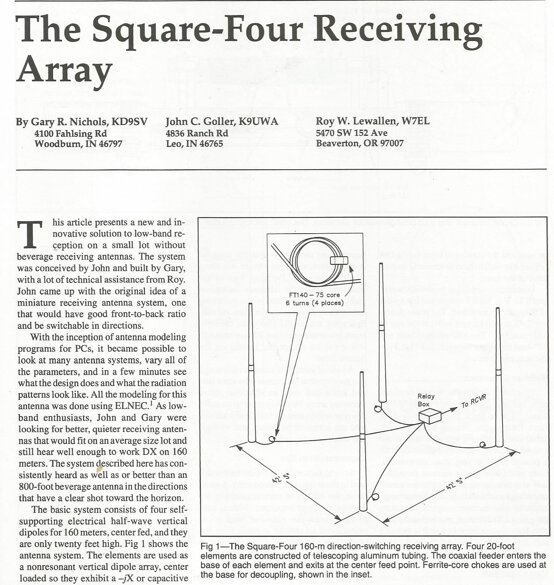
In December 1993 I managed to buy a lot of thousand meters at the foot of my entrance. Immediately flattened and leveled, on the public road and without any fence, I set about installing there one of my most successful antennas. A very serious project for 160 meters reception which had just been published in the "ARRL Antenna Compendium - vol. 3" by three very respectable authors: my Topband friends John K9UWA and Gary KD9SV, as well as Roy Lewallen W7EL, the father of the program for modeling antennas Elnec, later to become Eznec, in its various versions.
As stated in the article, It was a project not easy to realize, consisting of four vertical dipoles, loaded with inductors at the center and isolated from the ground, so there was no need for radials, but edverything was extremely critical. Fortunately, both John and Gary were enthusiastic to offer me all their assistance, and by post, since there was no internet and e-mail yet, they answered all my questions with drawings and notes.
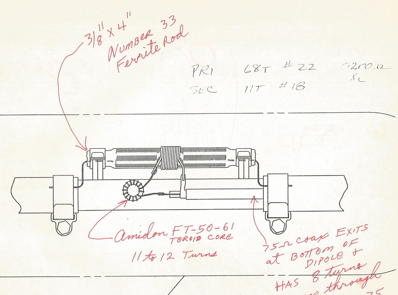
The vertical elements were 10 m. high, at 13 m. from each other. Once I had managed to bring all the four to exactly the same impedance value - and all the windings resulted different in each element - it was necessary to switch them, two by two, with this circuit, to get 155 degrees of phase shift between them.
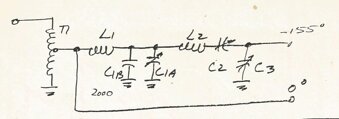
Tuning of trimmers and capacitors, In order to get exaxctly that 155 degrees phasing was not easy, and once again, KD9SV’s help was invaluable, but to do so, I needed an oscilloscope, which I purchased on the second-hand market.
At the end, I obtained the desired results that allowed me to reach 250 countries on 160 m. DXCC in the next five years (1999) and to get the WAZ with all 40 zones (# 28) in Sept.1997.
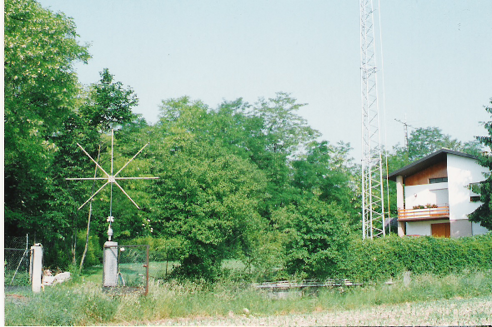
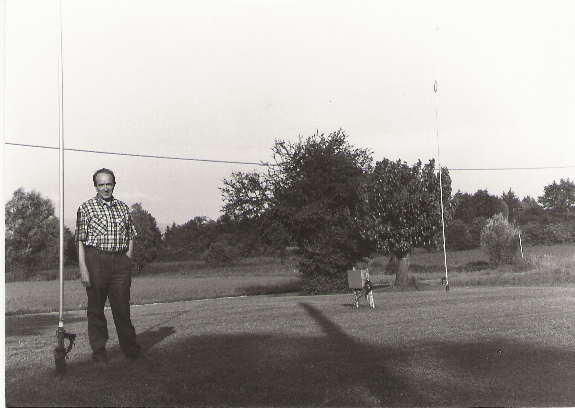
In this photo, you can see two of the vertical elements and the central aluminum box with the phase shift and switching circuits.
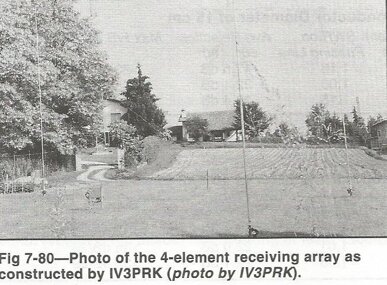
In those years there was no pileup on DX or rare expeditions, even from the Pacific, where I was not present - sometimes the only Italian - or at most together with Piero IT9ZGY or Fausto I4EAT (unfortunately, both SK). Maybe for this reason, John Devoldedre, ON4UN, who was preparing a new edition of his “Low-Band DXing” wrote me to ask what kind of antennas I was using. I answered, sending him photos and comments. So, referring to that “mini 4-square for 160 m.” described on ARRL Antenna Compendium vol. 3, John published my successful construction - the only completed in Europe - in chap. 7 of the third edition of his book, released in 1999.
It was a great honor!
2000: the Pennants system.
Finally, in late 1998, I could buy the 2.600 sq. meters lot on side of my property and, in a few years, that agricultural field of the above picture, became a green garden where I planted a lot of trees and some poles supporting the new type of receiving antennas, the Pennants.
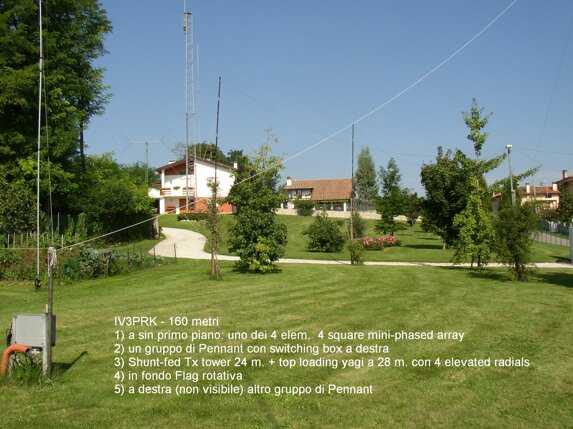
The Pennant antenna was first introduced by Earl Cunningham, K6SE (SK), on QST Magazine in July 2000, and immediately it became my preferred one for receiving on 160 meters: in 90% of cases they give me the best results.
It is very easy to build, and I wrote a short PDF document with all the details.
In a few years, I built many Pennants and installed them in two groups of three, with 90 meters of separation, for broad-side configuration; I tried also to feed them, plus others, in several end-fire configurations, for a maximum of ten Pennants involved.
All details can be found in the PDF files on the side.
I add here also other useful files on transformers and chokes, and the circuit of my 1843 oscillator used for all antennas performance tests.
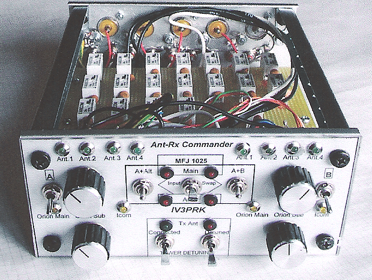
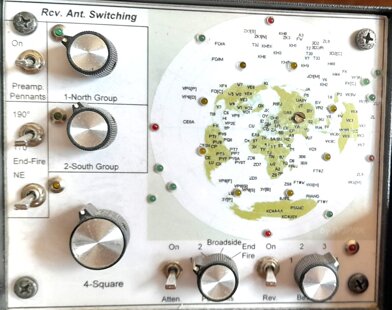
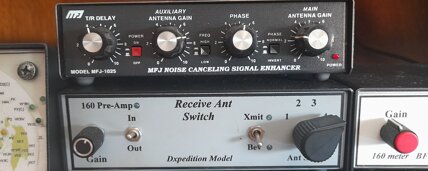
With so many receiving antennas installed, I tried to make the best use of them, even trying to phase each of them using the MFJ-1025, an accessory known as the "MFJ Noise Canceling Signal Enhancer". To quickly switch it in and out, change the 4-square array directions and select all the possible Pennants combinations - broadside or end-fire - I designed and built this home-made combiner and switcher.
2004: the rotatable Flag.
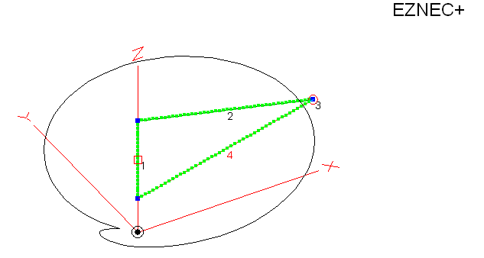
But, despite all my efforts, the noise was increasing and receiving conditions on 160 meters were getting always worse. In the “Study on interactions between antennas on low bands” of summer 2004, I modeled with Eznec+ all my Rx antennas (9 Pennants, a low dipole and the 4 mini-square array), together with the Tx antenna and its radials. I realized that I should have detuned the shunt-fed tower and, first of all, obliged to replace the four elevated radials with an “on ground system”.
But “on the field” results confirmed that my southernmost receiving antennas were badly affected by the noise from surrounding utility lines: pennants in the north group were always quieter than those in the southern group. All the feed-lines were deeply buried, with common mode chokes, but no way to get rid of the noise. Also the “receiving 4-square array”, which had been my winning workhorse for many years, became noisy: probably the culprit were the power and telephone lines along the southern border of my lot, carrying data to a new neighbour activity with modems and printers always on.
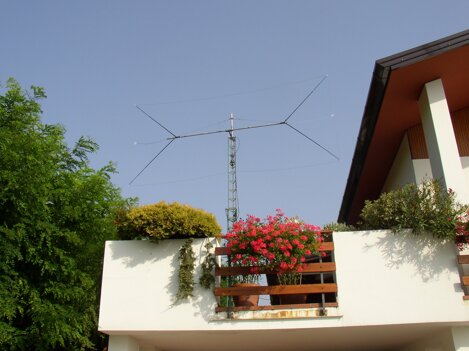
So, I decided to go “above” the noisy power lines, and I build and put on an old small telescoping tower, the W7IUV rotatable flag. It takes the name by W7IUV because Larry developed it with the design of an innovative preamplifier, but Flags and Pennants belong to the same family of receiving antennas and had been introduced together by Earl, K6SE, in his famous QST July 2000 article.
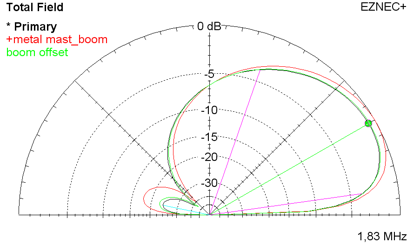
Starting from his original Eznec model, I added my metallic boom, mast and tower, and found a convenient distance of 40 cm. from it, to be sufficient to recover a good cardioid pattern.
Thil is the resulting elevation plot:
Bingo! That Flag became my best receiving antenna: better and quieter than any other, despite its feedline lays on the roof and not underground as those of the Pennants.
These are the final numbers taken
from the W7IUV constructive design:
Dimensions: 4.27 x 8.84 m. - Load resistor: 945 ohm
Matching transformer: 3 by 12 turns on a binocular BN73-202.
Gain: -30 dB; Take-off angle: 30 degrees; Beamwidth: 150 degrees; Front to Back: 30 dB; RDF: 7.84 dB.
2006: the K9AY Loop.
In late 2005, I managed to buy a small piece of land bordering mine, to use as vegetable garden but, of course, my first thought was at a new antenna. That place, free of human walking, seemed suitable to test the K9AY loop.
This is one of the most popular receiving antennas, described by Gary Breed, K9AY, on Sep. 1997 QST, before K6SE with pennants and flags, and belongs to their same loops family, can fit in a small lot, at ground level, but needs a ground connection, and that's usually a nuisance.
I built it in the summer 2006, exactly as designed by Gary and sold by “AY Technologies”
as the AYL-4 model, pictured below. EZNEC modelling shows nearly the same performance of flags and pennants, but it is more compact and can be easily switched in four directions.
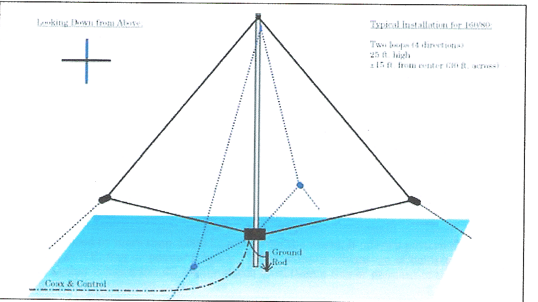
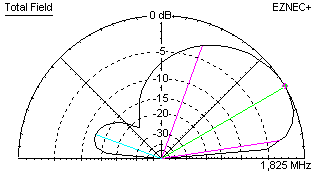
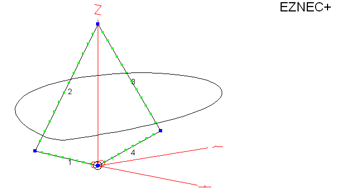
Referring to the image to the left, these are the dimensions:
Highest point = m. 7,80; Wires 2 / 3 = m. 7,86; Wires 1/ 4 = m. 4,78;
Two loops of a total wire length = m. 25,28 each loop.
Gain = - 25.5 dB, RDF = 7.5 dB
The commercial AYL-4 model has a terminal load resistance adjustable from 340 to 680 ohms. In my case, for a single band operation, I choose to switch between 410 and 460 ohms, but it should be better to go on the lower side. My transformer is wound on a binocular BN73-202 with 8 turns on primary and 3 turns on secondary, for a perfect match on the 50 ohm coax cable (SWR = 1.02). At first I provided also an ICE preamplifier in the switching box, but it confirmed once again to be too noisy and I threw it in the junk!
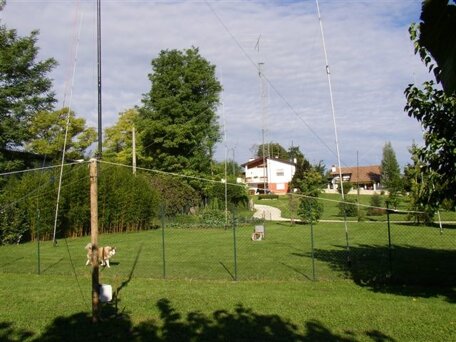
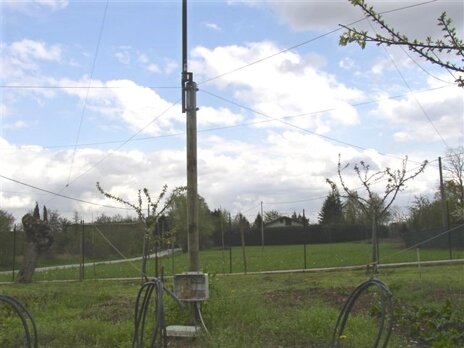
These are the pictures, taken from the K9AY loop, towards north - and all other antennas - and towards south.
Checking with antenna analizer, everything was working ok, but, on the air results were quite disappointing !
The K9ASY loop, in my environment, was very NOISY and it has been always worse than all my other Rx antennas. For almost two years, I carried on several tests, during nigth and day, and, at last, I have been convinced that the culprit was a very close crossing telephone cable.
With such a noise level, also during the night, it was always impossible to get any meaningful s-meter reading on 1.8 MHz, but on the AM Broadcasting band the antenna works as it should, with a correct F/B report.
Again, as on all other antennas, the noise level is worst right on the 160 meters band…… so, shortly, I will dismantle it in order to better use that space for our vegetable garden.
Anyway, for sure, the K9AY loop is a good antenna and works well in a better location!
April 2008 Luis IV3PRK